 seo digital
edge
seo digital
edge

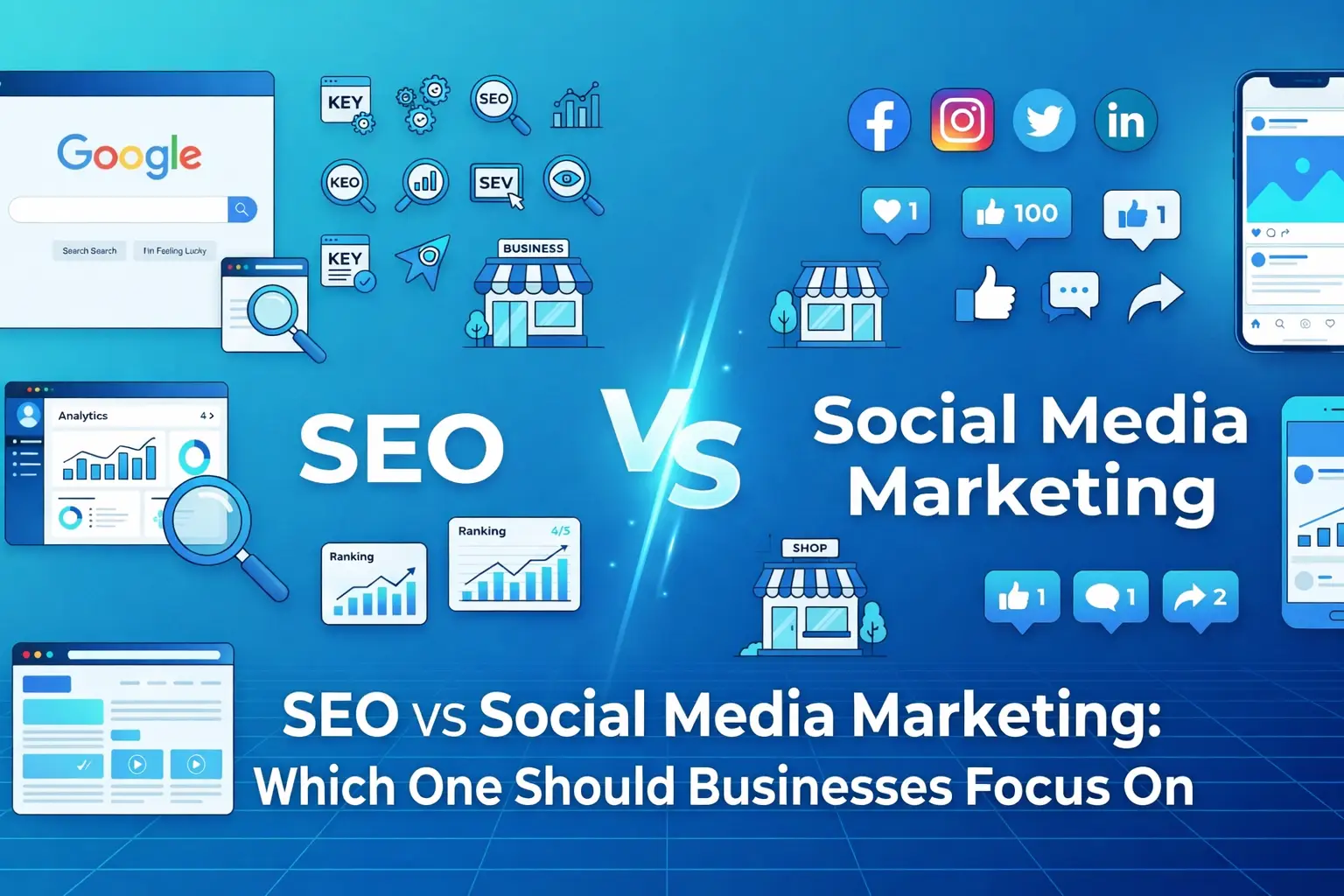
All business owners asking “where should I allocate my digital marketing budget?” eventually comes to this junction search engine optimization or social media marketing. Both channels offer visibility, leads, and growth, but they function in completely different ways and bring results on widely varied timelines. Knowing how to tell the two apart is not only helpful, it’s critical if you want to spend your time and money more wisely. Whether you are running a local service business or building an e-commerce brand, the channel you prioritize today will shape your brand’s footprint online for years to come.
So at SEO Digital Edge, we have businesses come to us asking this question every single day. The truthful answer is neither channel is ‘better’ in a universal sense yet one virtually always works better than the other for your particular goals, budget, and stage of growth. It is going to take you through what each strategy actually delivers, where they fall short, and how can you think clearly about which one deserves your attention at the moment.
What is SEO, and why is it important?
Search engine optimization (SEO) is the process of getting your website to rank higher on Google and other search engines for keywords that your target audience is actively searching for. When a user searches “best digital marketing agency near me” or “how to improve website traffic,” SEO is responsible for whether your website appears in those results or gets buried on the fifth page where no one clicks.
The nice thing about SEO is it attracts those who are already searching for what you provide. This is known as intent-based traffic, and it converts at a significantly higher rate than traffic driven from most other channels. However, someone who discovers your business thanks to a Google search is significantly further along in their purchase journey than someone who randomly saw mention of you in their social media feed while scrolling through.
SEO results take time usually three to six months before you’ll see meaningful movement but the payoff is compounding. A blog post that ranks on the first page of Google can attract steady, qualified traffic for two, three, even five years with no further investment. And it’s one of the very few digital marketing strategies that truly creates long-term equity for your brand.
What is Social Media Marketing and Why Does It Matter?
Social media marketing refers to the process of promoting content on platforms such as Instagram, Facebook, LinkedIn and X (formerly Twitter) in order to grow an audience, increase engagement and drive brand awareness. The inclusion can either be organic posts or paid social advertising, both with a different objective in your overall marketing mix.
Where social media really shines is in brand discovery and building communities. It enables companies to display their personality, interact directly with customers, react to feedback in real time and produce content people actually want to share. For businesses like fashion, food, fitness or hospitality that are in visually driven industries, social media is frequently the first point of contact a prospective customer makes with a brand.
Paid social advertising can be especially potent and produce immediate results. You can run a Facebook or Instagram ad campaign and sometimes get traffic in a matter of hours. This means social media can be a good bet for product launches, seasonal promotions, and any other time-sensitive campaigns where the timing is more important than ranking in long-term search results.
The Key Differences That Every Business Should Know
Want to capitalize on search intent vs. discovery? SEO is demand capture someone is already searching for a solution and you want to be the answer. Social media sets the demand nobody was necessarily searching for your product, but persuasive content makes them crave it.
Once you get your ranks established SEO traffic is, for the most part, free but does require a massive up-front investment into content creation technical optimization and building links. But organic reach from social media has plummeted in the last decade, so unless they want to pay for visibility on a platform they've invested years building an audience with like they must today.
Another major difference is longevity. A well-optimized web page can drive traffic infinitely. A social media post even a fantastic one there’s not much shelf life, hours-on most platforms before it disappears in the feed. This means that SEO is a much more capital-efficient channel for businesses in it for the long haul.
When Businesses Should Prioritize SEO
SEO works best for businesses and products/services that people actively search for online. If the people you sell to use Google to look up what your business offers accountant, home renovation worker, doctor, lawyer, digital marketing professional then SEO is the core of your digital system.
Local SEO which focuses on search queries with geographic intent, such as “plumber in [city]” or “best restaurant near me” can be beneficial for any business based on those criteria, but it’s especially important for service-based businesses in competitive local markets. Showing up in the Google local pack for these searches translates directly to phone calls, bookings, and walk-in customers without paying money on Google ads every day of your life.
Content-driven businesses SaaS companies, online learning platforms, blogs, publications also depend on SEO for survival since the entire business model is around growing reader traffic via organic discovery.
When Social Media Marketing is a Better Fit
Social media marketing is the better option for companies whose sales depend on visual appeal, storytelling or community engagement. Fashion brands, food businesses, fitness coaches, artists and lifestyle brands have found that the content on Instagram or TikTok drives customer acquisition faster than SEO (if there is no website yet to earn domain authority before ranking in search results).
It also makes significant sense for companies running time-limited promotions, or new product launches when a waiting game of six months for SEO results is simply not an option. In these instances, a targeted paid social campaign can drive instant traffic and sales, while your organic SEO effort grows in parallel.
They might start with social media just because it’s a fantastic way for their business is brand new and doesn’t already have an online presence, there as they build credibility of the business, testimonials from customers and content before their website can get up the “authority” to rank in search results.
The Best Method: Both, but Aim for the Wings
For most businesses, the best digital strategy is not choosing one versus the other it’s understanding which deserves more of your resources at this stage in your growth, and building to a place where both help fuel each other.
Your SEO strategy can be fed by your social media content. Social Posts Instead of creating separate original social posts, you can easily repurpose blog posts that were created for SEO purposes as social content. You can also create content targeted to specific keywords from questions customers ask you on social media. When coordinated together, these two channels amplify each other rather than compete for budget and attention.
Conclusion
Avoid evaluating the merits of SEO and social media marketing independently: rather, look at your business objectives for insights into which strategy will yield more effective results based on how people use each channel and when you want to see those results come through. SEO creates sustainable, compounding visibility that pays off for years. Social media marketing can develop a quicker awareness and community, however it also means continuous investment to maintain the momentum. For most growing businesses, the best maneuver going forward is to put them both strategically to use with SEO as a long-term foundation and social media as the engine for near-term engagement and visibility.
At SEO Digital Edge, we take businesses at the other side devising digital systems that can deliver on real, tangible victories, without any budget being saved in tactics that have nothing to do with their objectives. Whether you are just beginning or trying to scale an already existing digital footprint, the right blend of SEO and social media can change how your customers discover you and how your business evolves over time.
FAQs
Q1. Is long-term growth better achieved through SEO than social media marketing?
Yes, because content keeps bringing organic traffic for years so SEO generally has a higher long-term ROI. And while social media requires constant investment of time and money to show up, SEO is the much more sustainable channel for ongoing, compounding business growth.
Q2. SEO vs Social Media – How Long Does It Take To See Results?
Where SEO might take three to six months before you see an increase, social media marketing can send traffic your way in days. Social media is quicker in the short term, and SEO produces more sustainable and cost-efficient results over time.
Q3. Is it realistic for a small business to invest in both SEO and social media simultaneously?
Absolutely, as small businesses may have tighter budgets; it's critical to budget effectively and put SEO at the forefront for long-term consistency whilst organic social-media content is used to maintain a brand presence in parallel reserving paid in-in social campaigns for those high-priority campaigns or flings only.
Q4. Does social media activity enhance the SEO rankings?
While social media is not a direct Google ranking determinant, it helps amplify content reach and earn backlinks/drives traffic to your site each of which can help positively affect your SEO performance indirectly over time.
Q5. What type of business is better with SEO than social media marketing?
Service-based industries such as law, healthcare, home improvement, finance, and local retail benefit most from SEO because the customers are actively searching for these types of services on Google prior to making a purchasing decision.